
From Celtic Ritual to Global Celebration: The Globalization of Halloween and Its Public Health Footprint
- ghigrocks
- Nov 3, 2025
- 4 min read

Written by: Ameena Momand
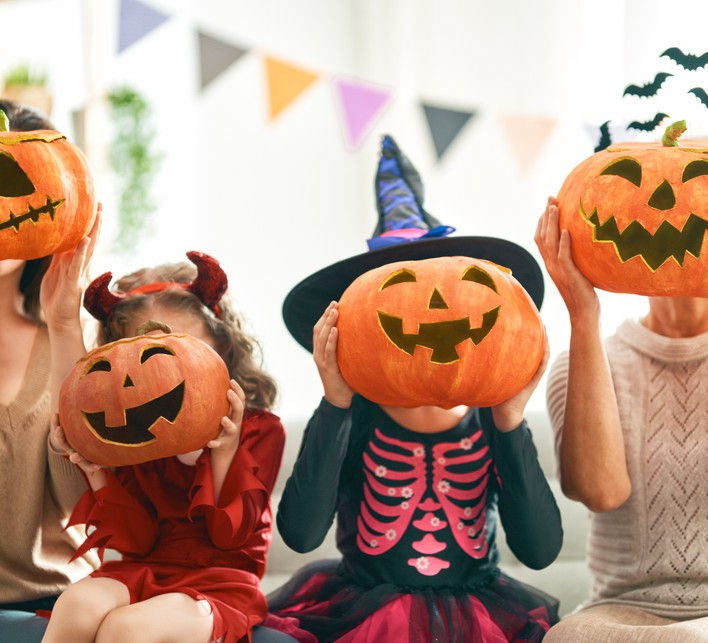
The carved pumpkin, the child in a superhero costume, the store windows filled with orange and black. For many people Halloween feels both inevitable and inexplicable. How did a festival rooted in an ancient Celtic calendar become a global season of candy, costumes, and late October commerce? The story of Halloween is not only a cultural history. It is also a case study in how traditions travel, transform, and create unexpected public health consequences as they move around the world.
The deeper roots of Halloween reach back to Samhain, a harvest festival observed by Celtic peoples in what is now Ireland, the United Kingdom, and parts of France. Samhain marked the turning of the year into the darker half and was associated with boundary crossing between the worlds of the living and the dead. Over centuries Christian practices were layered on these rituals, producing All Hallows Eve and then the shorthand Halloween (The Editors of Encyclopedia Britannica, 2025) . These historical shifts help explain why ghosts and the dead remain central motifs.
Halloween did not become the modern, child-centered holiday until it was reinvented in North America. Nineteenth and early twentieth century immigration, especially from Ireland and Scotland, brought Samhain-derived practices to U.S. cities, where they blended with other local customs. What followed was a slow transformation: community parties, the evolution of trick-or-treating, and the rise of costume culture (Tensley, 2024). The United States played an outsized role in shaping the holiday’s contemporary shape.
Since the late twentieth century, American pop culture and multinational retail have exported Halloween imagery worldwide. From Tokyo’s crowded Shibuya streets to theme parks in São Paulo, Halloween installations appear in places with no direct connection to Celtic harvest lore (Handwerk, 2017). That export is uneven: Halloween resonates where urban leisure cultures and consumer infrastructure already exist, and it adapts when it lands in new social settings. But the global spread is unmistakable.

One of the clearest examples of cultural entanglement occurs along the US-Mexico border and in Latino communities across the United States. Día de los Muertos, a distinct Mexican tradition that honors ancestors, shares a basic calendar neighbor with Halloween but differs sharply in tone and purpose. Where Halloween emphasizes fright and disguise, Día de los Muertos emphasizes remembrance and ritual offerings. In multicultural settings the holidays can blend, clash, or be intentionally kept separate (Bender, 2020). Those interactions show how globalized traditions do not simply replace older practices; they provoke negotiation over meaning and memory.

The Public Health Footprint of a Global Holiday...
When a tradition globalizes at the speed of pop culture, public health consequences can follow. In the United States Halloween is now an economic engine. Retail spending on costumes, decorations, and candy reaches billions annually (National Retail Federation, 2025). That mass consumption has downstream health and environmental costs. High sugar consumption, particularly among children who collect large volumes of packaged candy, can exacerbate dental disease and contribute to unhealthy diets. The packaging and disposable decorations that arrive with a global Halloween add to plastic waste streams and micro-plastic pollution when materials are cheaply produced and discarded.

Globalization accelerates consumption in two ways. First, multinational manufacturers and retailers scale up production and distribution (Molinari, 2024), making costumes and candy available in places where they were previously rare. Second, social media amplifies visible norms: a viral costume or decorating idea becomes a template that people worldwide try to copy. The result can be a rapid rise in single-use goods and a simultaneous weakening of local, lower-impact customs.

How does this global pattern look on the ground in a city like Birmingham, Alabama? Across the University of Alabama at Birmingham campus and the city’s neighborhoods, Halloween is both a community ritual and a site for public health and civic programming. UAB hosts seasonal events such as pumpkin contests, family-friendly activities, and campus conversations that use Halloween themes to discuss mental health, safety, and community wellbeing (UAB Campus Calendar, 2025). Local public health practitioners and scholars at UAB could use the holiday as a teaching moment to promote dental health, safe trick-or-treating practices, and sustainable celebrations. The university’s engagement demonstrates how institutions can steer a global cultural practice toward local health goals.
Some communities are already experimenting with alternatives that preserve festivity while reducing harm. Trunk-or-treat events, where candy distribution is centralized and supervised, can improve safety and allow easier promotion of lower-sugar options. Costume swaps and makerspace workshops encourage reuse and creativity rather than single-use purchases. Public health campaigns that collaborate with retailers can encourage smaller portion sizes or promote alternatives to candy. These interventions show that globalization does not make cultural change irreversible. Clever policy and community design can shape how a holiday travels and lands.
What Halloween Teaches Global Health:
Halloween’s journey from Celtic field to global shopping mall illuminates broader patterns of cultural globalization. Traditions can travel fast, but they rarely arrive intact. They are remade by markets, media, and local actors, and those transformations can have real consequences for health and the environment. For cities such as Birmingham and institutions like UAB, the holiday offers an opportunity. By understanding how globalization reshapes celebration, public health practitioners can promote safer, healthier, and more sustainable versions of the rituals people now share across continents.
References
Bender, D. (2020). The Mexican Day of the Dead and Celtic Halloween on the Borderlands. In ResearchGate.
Handwerk, B. (2017, October). Halloween around the world: Costumes in Germany, UK, and beyond. National Geographic.
National Retail Federation. (2025, September 18). NRF consumer survey finds Halloween spending to reach record $13.1 billion [Press release].
Smithsonian Magazine. (2024, October). Celtic origins of trick-or-treating: Halloween’s roots.
The Editors of Encyclopaedia Britannica. (2025). Samhain. In Encyclopaedia Britannica.
UAB Calendar. Halloween – The University of Alabama at Birmingham.
U.S. Chamber of Commerce. (2025, October 13). How American businesses make Halloween a spooktacular economic success.


Comments